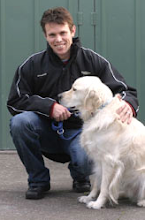
Dogs are quite sensitive to weather changes. Heated dog houses aren´t a luxury but a necessity especially if you want to keep your dog warm during winter months.
Installing a heated dog house need not be expensive. The prices of heated doghouses will depend on the type of structure and the setup you prefer. Also, the contractor prices will defer depending on who you hire.
Although most dogs have fur, typically most dogs fur cannot keep your pet warm during the winter, that is why a heated dog house is needed.
One of the best heating systems for dog house I have used is the PetCool Therm Assure. This system has both air conditioning and heater and is easy to setup and install. It helps to keep your dog house cool during the summer months and warm during the winter.
The price is affordable and it has automatically environmental controls keeping the temperature inside the doghouse cool all the time. If you don´t have the budget, then you might want to consider getting a heated pet bed instead. Most pet supplies stores should carry these dog heating products.
Larger pet stores such as Petco and Petsmart have custom sized heated dog houses available. They should also carry most types of DIY doghouse heating systems as well as heated pet beds.
Another alternative to buy heat doghouse is to go online. There are a few specialised online pet retailers that carry custom sized heated dog houses and supplies. You can also visit ebay. Most online sites nowadays will provide shipping and delivery for a small fee or even free shipping.
If you are not sure about how to install the heating system in your dog house, it would be better to engage a contractor to do it for you. Alternatively, buy a heated dog house that comes with everything already installed.
Check out the best wooden dog house online. Learn where to buy custom cedar dog houses at my site.
Wednesday, December 31, 2008
Heated Dog Houses – Why Buy Heated Doghouse?

Tuesday, December 30, 2008
Biting Dog Case Study
Sam is a three-year-old terrier mix that has a problem with biting. Other than biting the other dog at home, an 8 year old Spaniel, Sam has the habit of a dog biting and surprisingly snapping at his owners, Ted and Shelly. Both of them are concerned that Sam's biting behavior will cause problems and because of this they constantly make sure that Sam won’t get near their grandkids out of fear for their safety. However, keeping Sam in a separate area of their home has only caused an increase in their problems; he has started to chew and bark out of frustration, he gets easily agitated and always gets a little out of hand. Finally, Ted and Shelly both decided that it is time to put a halt on Sam out of his biting habit.
Since the dog has clearly outgrown the puppy stage that has the most amounts of biting and gumming and the biting habit has been going on for a while , and Shelly sought the help of a professional. Obtaining a referral from their family vet to an excellent veterinary behaviorist, Ted and Shelly made an appointment to bring Sam and meet with the professional vet behaviorist. During the first meeting, Sam made an attempt to bite Shelly when she pulled him out of his kennel and snapped at the behaviorist when he tried to hold him.
The behaviorist felt the first step was to have a medical checkup done on Sam, since a medical problem may be the cause of the biting. They considered that a medical reason may be the case because since Sam snapped at Shelly and the professional when he attempted to touch the small dog. Often, dogs that are in pain or discomfort use biting as a form of protection to stop the pain from occurring. However, after a full medical examination on Zoe, he was found to have a full bill of health.
The next thought was that Sam might be responding to a certain trigger. But since Shelly and Ted adopted Sam when he was still a puppy, they can’t figure any possible abusive background on their pet. To see how Sam interacts with them and their older dog, the behaviorist frequently makes a visit to Shelly and Ted's home. The visits proved to be quite educational and the behaviorist was able to determine that Sam used biting to showcase his jealousy. Especially since he was kept in a different part of the home and avoided when the grandchildren come to visit, Sam is increasingly jealous and uses biting to show his annoyance .
After the regular visits and examinations on the smaller pet dog, a training plan is implemented where Sam is instructed "no bite" and then sprayed with a water bottle. This command enforces the training and the spritz gets the dog's attention. Once Sam shuts his mouth, he is remarkably praised. Additionally, more steps were made to include Sam back into the home. Whenever the grandchildren come to visit, Sam is present, but he’ll be securely muzzled until he became fully trained to stop biting. Once this training was complete, Sam could be commanded and immediately close his mouth in order to abort the biting attempt. However, Sam wore a muzzle whenever Shelly and Ted left the two dogs alone and unsubstantiated , to prevent any injuries to the older dog.
Monday, December 29, 2008
Why Dogs Bark
Why do dogs bark? That’s easy: dogs bark because they are telling you something, interacting with other dogs, or showing an emotion. Most likely, you’ve observed your dog with another dog at some point and seen them interact. Dogs bark at each other when they play or are just hanging out together. Sad to say but we are only able to guess the cause for your dog's barking behavior. The implication of their bark is easier to understand when dogs communicate with humans. The simplest way to understand barking is it relates to human beings is to compare it to a crying baby.
Babies cry when they are hungry, gloomy, bored, lonesome, need to be changed, or sick. When asking yourself, "Why do dogs bark?" the answer is just the same. Your pet’s bark will notify you when they are ready to have their meal, when they want to go outside, when they’re feeling something, when they would like a treat, and so on. It’s understanding to decipher just what that bark means that could take some time. Having your dog for quite a while, you'll start to appreciate of what the barking means much more clearly.
Why do dogs bark at nothing? The answer is they don't. It may look like there is no reason for barking profusely, but that is not always the case. When your dog barks incessantly, and you think they are for no reason at all, try to consider the possibilities. Is your dog in pain, hungry, excited to go for a walk in the park or they have spotted someone outside your home? We may not notice some of these smaller things going on around us, but your dog will. If your dog is barking at the walls or at something non-existent, there is a possibility of psychological or health reason fro the barking, so you may want to have your beloved dog checked out by the vet .
Why dogs bark nonstop? Try observing your dog to figure out what is the reason for barking. Most of the time, if you observe them, a dog will likely point their nose in the direction of whatever it is they want while barking at the same time. If you notice that your pet is barking nonstop and standing just beside the cupboard where you keep your doggie biscuits, then you’ve just figured out what he or she wants! Dogs normally show their behavior, and it’s up to each owner to pay close attention to their beloved pet to figure out what their bark is telling them. Barking incessantly means that there is a need not being met. In some situations, to control the behavior, regular exercise is a must, because that need may not be met at all.
Why dogs bark when you are telling them not to do something? Not all dogs do this, but if your dog does, you can probably relate it to a teenager talking back to a parent. How to know if your dog is talking back to you? You would hear them barking at you or making noises when you. It's their way of being disobedient towards you. To instruct and train your pet that you are the boss to restrain this rebellious behavior, you should definitely use some respect training.
Understanding why your dog barks is the key to controlling the behavior. Some barking behavior is a lot easier to control by meeting their easy needs like feeding them, water, or a walk outside. Nevertheless, barking behavior is a result of parting anxiety, fear, or dominance needs to be curbed with exercises before it escalates into more hostile or detrimental behavior.
Sunday, December 28, 2008
Essential Dog Training for Every Dog
It is always so exciting to bring home your new puppy. There is a lot of responsibility that comes with owning a dog especially if you want to be considered a responsible dog owner. You have to feed her, groom her, provide her with proper health care, and give her a safe place to call home.
One of the most important things you can do for your new dog is to make sure that they at least have basic training.
Discipline and Behavior
You really do not want to have a dog that is misbehaving all the time. They can an be an embarrassment and in worst cases, they can be dangerous.
Training requires lots of time and patience, but in the end you will have a well behaved dog that you can be proud of. The bond between you and your pet can be strengthened through training. Taking the time to train your dog will teach what you consider to be appropriate behavior. For best results start early.
Dog Obedience Training
Obedience training is also an important part of your dog's overall training program. Levels of training varies from basic to advanced.
At a minimum you should make sure that your puppy goes through basic training. Commands like sit, stay, and come, are all part of basic training. So are house training and leash training.
Of course, you can always progress to a more advanced level. More training will mean a better behaved dog. You can include training to prevent destructive behaviors like barking, digging, chewing, and aggressive behaviors. Just find a program that meets your needs and provides a results such as Sit, Stay, Fetch.
Puppy Training
Start puppy training from an early age. Some people wait too long to start training their puppies and it makes it a little more difficult and frustrating. Some people believe that it is not possible to train a puppy younger than six months old, but I assure you that is a myth.
Of course there are some skills that are beyond a puppy, teaching many of the commands and appropriate behaviors can start right away. Just do some research to make sure you follow the proper techniques.
There are many different sources of information available - dog training books, ebooks, websites, and even complete training programs. Another alternative would be to enroll in group training classes. If you can afford to you may want to consider hiring an experience dog traininer.
Group Training Classes
Most of the larger pet stores offer training classes. Being in a group setting usually makes them cheaper. You can also ask around as your local area animal shelter or other animal groups may offer free or discounted group training classes.
Group training provides your dog with the added benfit of socialization.
Professional and Experienced Trainers
With a professional trainer you get the benefit of one on one attention. Just be sure to ask around for recommendations so that you can find a trainer who is know to provide results.
You should hire an experienced dog trainer for big problems such as aggression in your dog. This is not something you want to try and handle on your own.
Conclusion
Being a dog owner is a huge responsibility. It is also our job as responsible dog owners to make sure that we have well behaved dogs. Just be sure that you go into any training program with an open mind and the right attitude and you will find that it is a rewarding experience.
And remember, you can always search for more information about dogs.
Saturday, December 27, 2008
Types of Dog Aggression Behaviors
Anually , while only a small percentage of people are bitten by dogs, there are a lot of unacceptable other types of aggressive dog behavior. Rarely, violent behavior can be obvious symptoms of aggression, but its more reactive for other kinds of dangerous behavior. Whether you observe their behavior as a more passive-aggressive or just a total danger, they are still behaviors that can escalate or cause problems in your home or people around you.
First, it is important to note that the types of violent behavior of dogs are not familiar in any other breed over another. We also need to know how to handle an aggressive dog. Only about 1 percent in every breed of dogs shows signs of violent behavior. It is just definite, in certain breeds of dog; more volatile types of aggressive behavior appear to make the news more often, and for that reason, we assume it is common. Hence, it is crucial to keep in mind that any dog exhibiting signs of violent dog behavior need to be taught out those manners.
There are specific types of aggressive dog behavior that occur for a variety of reasons. Generally, symptoms of outward aggression are growling, snarling, curling lips, and biting. Just because they are to be the most threatening qualities more people talk about the variations of aggressive behavior. Traits of aggression in dogs can also be like mounting people, lunging, blocking your way and barking. But dog owners tend to dismiss these as peculiar traits because they think that its actions are not as directly aggressive towards humans.
Though these types of violent behavior occur mainly depends on what the root causes are . There are a least number of reasons for this kind of behavior. When your pet is trying to create dominance it will usually do a lot of jumping, lunging, blocking or mounting actions on you. Dogs are pack animals, so they will most of the time try to exhibit supremacy over small kids by “herding them” which might involve small nips at their ankle, while male dogs may try to create dominance to mount members of the family. It is essential when you observe these kinds of violent dog behavior to establish that you really the ‘alpha dog’ by taking control of things and situations.
One reason for violent dog behavior is fear. A frightened dog’s initial response will normally be to put its tail between its legs, pull its ears back, and look away, or it will even run. Although if a dog feels trapped , it may lash out with growling, snarling, and even biting. It is essential for your dog to feel secured, but there are a lot of methods to condition your dog to lower a fear response.
Facts like these, we can single-out ideas on how to handle an aggressive dog. This kind of aggressive dog behavior might be observed if your dog is feeling territorial or possessive. Dogs often have a sense of territory that they do not like to share their most possessed treasures and if closely observed, the same thing goes for humans. Also, a lot of aggressive behaviors may occur if your dogs feel that their territory is being violated or even when a family member is in danger. It is essential to restrain this kind of manner by taking precautionary actions and potentially dangerous situations should be avoided. For example, if your beloved is aggressive only when he or she eats, then you need to keep people away from his/her saucer during feeding times. You also need to institute that you are the boss over the food.
When dogs face fear or territorial breaches, when they cannot take their aggression out on the thing causing their fear, dogs sometimes turn their aggression toward something or someone else. This is called redirected aggression. Again, this behavior needs to be discouraged. Keep in mind though that discipline may be ok, but punishment is not. Samples of situations that encourage dogs to act violently are punishments that are imposed to them.
Whatever the reasons are behind these kinds of aggressive dog behavior, it is significant to discourage your dog from showing the behaviors. Allocate time to train your dog, which seldom needs a lot of patience and time, so that you keep your dog nourished, happy, and secure.
Thursday, December 25, 2008
Eliminate Your Dog's Aggression Now
Are your dog aggression problems going out of control and are now in desperate need of obedience training? Then you're in the right place. Here are four side-by-side reviews of the four best dog aggression training sites in the net today.
Sit Stay Fetch is the most excellent dog training website and we highly recommend it as it has lots of helpful advice to end your dog problem. Daniel Stevens talked about everything you need to know about how to fix your dog’s aggression problems and even have over 100 step by step images which made learning easier and what he discussed was really interesting. Next, Dog Training Secrets is very educational; although the downside is that it doesn't have supporting photos to illustrate instructions. The third is Secrets of a Professional Dog Trainer. Some great tips are also available.
Sit Stay Fetch - Dog Obedience Training, covers all points of aggressive dog training and helps answers many dog problems, for example, your dog being usually disobedient, your dog being over-aggressive, being quirky off-leash or even on-leash, not appropriately housetrained, etc. Besides it being very informative, it also has over a hundred photos to supplement instructions. It includes the most modern dog training tips (used by professional trainers themselves) not available in other books like dog whispering and advanced behavioral training among other things.
Dog Training Secrets by Charlie Lafave, shares to you the significance of training your dog and what may happen if you don’t. Includes pretty much everything you need to know about dog training, like the 7 common behavioral problems and solutions. For those who have left they're dogs untrained, there's a chapter for training adult dogs as well.
Starting from how to choose and purchase a dog, Secrets of a Professional Dog Trainer covers all possible about training dogs. This e-book is very lengthy and a bit boring, but finds the patience as it has very useful tips. Warning for the visual person: there aren't any pictures at all and you might find it hard following certain instructions. It includes questions usually asked by people who want to train their dogs on their own. And there is no table of contents.
How To Train Your Dog in One Evening, covers 10 most frequent problems. The priority is to help you find out why your dog is having certain problems in the first place. Then it goes on with step-by-step directions, to show you what to do to solve these problems. This ebook is direct and easily understandable. Although correct, training your dog for obedience in one night is almost impossible.
Wednesday, December 24, 2008
Dog Fear Aggression Case Study
Popo, a Pomeranian dog has an excessive fear of loud noises. Popo turns his fear into aggression when he hears loud noises, and has already bit his owner Lindsey twice. Additionally, Popo fled when some guests began firing small fireworks during a Forth of July celebration. Good thing, Popo was found by a neighbor the next week and was safely returned to Lindsey. Moreover, Lindsey is concerned that Popo’s {relentless trauma | severe phobia} and aggressive approach is leading him on to tragedy.
Lindsey sought expert advice from her vet on how to stop dog fear aggression. The veterinarian believes that Popo’s fear of loud noises originates from his petite size. In order to stop aggressive dog tendencies, the veterinarian suggests the operation as view of the fact that the dog has yet to be neutered. In the past, Lindsey has considered the procedure and consent of the operation. Popo have a reduced aggression after the treatment, but what’s left was his fear.
Concerned about her dog’s behavior, she then visited a veterinary behaviorist. The veterinarian’s plan was agreed upon by the behaviorist, but the professional feels that a lot should be made to address the fear prior to dealing with the dog’s fear successfully. Popo’s fear is starting to lessen after working closely together with the behaviorist for quite a few sessions. And for the dog to feel a source of comfort and security, the behavior specialist asks Lindsey to hold Popo. The dog is also restrained so that he will not be able to harm anyone in the clinic. Slowly but surely, the dog is exposed to numerous different volumes of sound. . If Champs exhibits any sign of fear or aggressiveness, the stimulus is removed and Laura continues to pet, commend, and comfort. In the long run, Popo’ fear of loud noises slowly diminished and stopped acting out in aggressive behaviors in order to protect him.
While this fear is starting to weaken, poor dog is still afraid of thunderstorms. During these instances, the behaviorist gives prescription that will calm the dog. Upon giving the anti-anxiety medication, Lindsey observed a big change in his actions when the fear-causing stimulus is present. Furthermore, since Popo has started taking the anti-anxiety medication, the dog did not show any sign of violent behavior , even when the fear causing stimulus is present. Popo is no longer afraid of thunderstorms and today parties without the need of confining him, giving both him and Lindsey to breathe easier.
The therapy for Champs was a long process since the root of the problem must be dealt with in order to curb the aggressive actions. Popo lost his aggression and once again serve as a cheerful and healthy member to society after the fear had been surpassed through methods including prescription and behavioral adaptation. Though Popo is a small dog, Lindsey is worried his bite and felt the need to stop the aggressive behaviors before it worsens. Lindsey proved to be a responsible pet owner and consider Popo' situation to heart in the search to find a cure for the problem.